Disclaimer: This is not financial advice. Always consult a licensed professional for your specific situation.
You have enough cash to cover payroll this month, but a major supplier just announced a price hike. Your biggest client is taking 60 days to pay, but your rent is due in 30. This gap between what you have and what you owe is your working capital. In 2026, with persistent inflation and higher interest rates, managing this gap isn't just good practice—it's survival.
Working capital for small business is the financial metric that measures your company's short-term liquidity and operational efficiency1. It's the fuel in your tank for day-to-day operations. When it's positive, you can seize opportunities and weather storms. When it's negative, you're one unexpected expense away from a crisis.
How to Calculate Your Working Capital
The calculation is straightforward. You need your company's balance sheet.
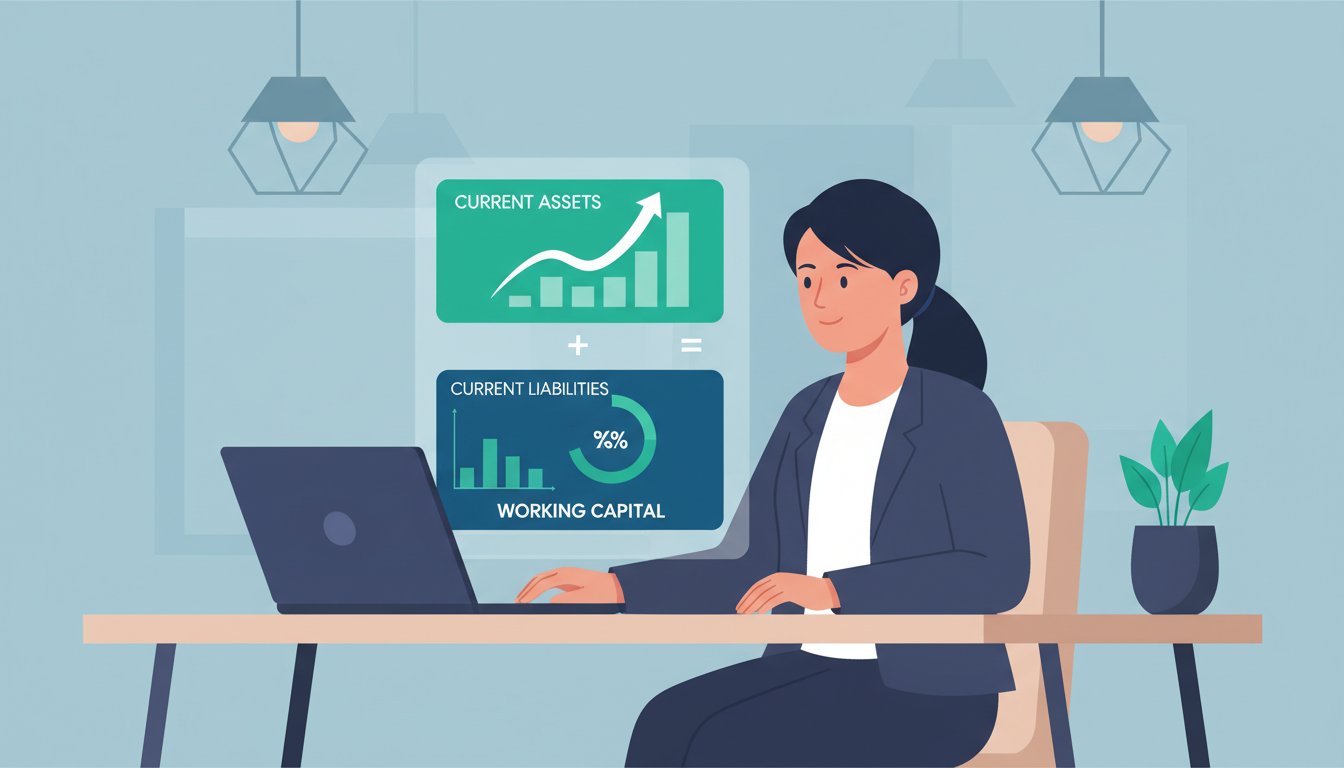
Working Capital Formula:
Current Assets - Current Liabilities = Working Capital
- Current Assets: Cash, accounts receivable (money customers owe you), inventory, and other assets convertible to cash within one year.
- Current Liabilities: Accounts payable (money you owe suppliers), short-term debt, accrued expenses, and other obligations due within one year.
A positive number means you have more short-term resources than short-term debts. A negative number is a red flag, indicating potential liquidity problems.
The Working Capital Ratio: A Deeper Look
While the dollar amount is useful, the working capital ratio (or current ratio) gives you a more standardized view of financial health.
Working Capital Ratio Formula:
Current Assets ÷ Current Liabilities = Current Ratio
For example:
- Current Assets: $150,000
- Current Liabilities: $100,000
- Working Capital: $50,000
- Working Capital Ratio: 1.5 ($150,000 / $100,000)
A ratio of 1.0 means your assets exactly cover your liabilities. The "ideal" ratio isn't universal; it varies by industry.
| Industry | Typical Healthy Current Ratio | Why It Varies |
|---|---|---|
| Retail | 1.2 - 1.5 | Fast inventory turnover and cash sales improve liquidity. |
| Service Business | 1.5 - 2.0 | Fewer physical assets; relies more on receivables and cash. |
| Manufacturing | 1.8 - 2.5 | High inventory levels and longer production cycles tie up cash. |
| Construction | 1.1 - 1.3 | Progress billing and project-based cash flow create unique cycles. |
A ratio significantly above your industry norm might mean you're holding too much idle cash or inventory. A ratio below it signals you may be over-leveraged.
7 Actionable Strategies to Improve Working Capital in 2026
Improving your working capital isn't about cutting costs to the bone. It's about managing the timing and efficiency of your cash cycle. Here are seven strategies tailored for today's environment.
1. Accelerate Your Accounts Receivable
Money in your customer's bank account isn't working for you.
- Shorten Payment Terms: Move from Net 60 to Net 30 or Net 15 where possible.
- Offer Early Payment Discounts: A 2% discount for payment within 10 days can be cheaper than a bank loan.
- Implement Automated Invoicing: Send invoices immediately upon delivery of service or goods. Use software to send automatic payment reminders.
- Conduct Credit Checks: Before extending terms to new clients, check their creditworthiness.
2. Optimize Your Inventory Management
Excess inventory ties up cash unnecessarily. In 2026, with potential supply chain volatility, this requires a balanced approach.
- Adopt Just-in-Time (JIT) Principles: Order inventory closer to when it's needed for production or sale.
- Identify Slow-Moving Stock: Use an ABC analysis. Aggressively discount or liquidate "C" items (slowest-moving) to free up cash and space.
- Negotiate with Suppliers: Can you return slow-moving items? Can you get better terms for faster-moving goods?
3. Strategically Manage Accounts Payable
While paying slowly improves your cash position, it must be strategic to avoid damaging supplier relationships.
- Use Full Payment Terms: If an invoice is due in 30 days, pay on day 30, not day 15.
- Prioritize Payments: Pay critical suppliers (those essential to your operations) on time. For others, communicate proactively if you need an extension.
- Evaluate Early Payment Discounts: If a supplier offers 2/10 Net 30 (2% discount for paying in 10 days), calculate if taking the discount provides a better return than holding the cash.
4. Renegotiate Debt and Explore Alternative Financing
High-interest short-term debt is a working capital killer.
- Refinance Short-Term Debt: Explore consolidating high-interest loans or credit card balances into a lower-interest term loan or SBA loan.
- Use Asset-Based Lending: Lines of credit secured by your receivables or inventory can provide flexible cash when needed.
- Consider Revenue-Based Financing: For businesses with consistent recurring revenue, this provides capital in exchange for a percentage of future sales.
5. Trim Operational Inefficiencies
Waste in your operations directly drains cash.
- Audit Recurring Subscriptions: Cancel unused software or service subscriptions.
- Renegotiate Service Contracts: For internet, phones, or SaaS tools, ask for better rates or shop competitors.
- Go Paperless: Reduce costs associated with printing, postage, and physical storage.
6. Forecast Your Cash Flow Religiously
You can't manage what you don't measure. A rolling 13-week cash flow forecast is your most powerful tool.
- Predict Peaks and Troughs: Know when you'll have cash surpluses and shortages.
- Model Scenarios: What happens if your top client pays 30 days late? What if you land a new big project? A forecast lets you plan for these.
- Use a Template: Start with a simple tool. You can download our free, easy-to-use Cash Flow Template to build your forecast.
7. Adapt to the 2026 Economic Climate
The post-pandemic economic landscape has changed the rules.
- Inflation's Impact: The cost of holding inventory (storage, insurance, capital cost) is higher. Your receivables lose purchasing power the longer they go uncollected. Be more aggressive with both.
- Higher Interest Rates: The cost of debt financing is up. Improving your internal working capital efficiency is now more valuable than ever, as it reduces your reliance on expensive external capital.
- Supply Chain Caution: While "just-in-case" inventory was the norm, it's costly. Focus on building strong relationships with key suppliers and diversifying sources where possible instead of simply stockpiling.
The Path to Sustainable Liquidity
Improving your working capital for small business isn't a one-time project. It's a continuous discipline of managing your balance sheet as actively as your profit and loss statement. Start by calculating your current ratio today. Benchmark it against your industry. Then, pick one or two strategies from this list—like tightening your receivables or building a cash flow forecast—and implement them this quarter.
The goal is to build a business that is not just profitable, but liquid and resilient. When you have strong working capital, you control your destiny. You can invest in growth, negotiate from a position of strength, and sleep well at night knowing the bills are covered.
If analyzing your balance sheet feels overwhelming or you need a tailored plan to unlock cash trapped in your operations, professional guidance can provide clarity and an actionable roadmap. You can book a free, no-obligation consultation to discuss your specific working capital challenges here.
Footnotes
-
U.S. Securities and Exchange Commission (SEC). "Beginners' Guide to Financial Statements." https://www.sec.gov/reportspubs/investor-publications/investorpubsbegfinstmtguidehtm.html ↩